




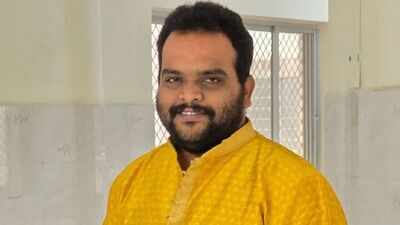
A classroom is usually where students go to learn from a teacher. But for Dr Surakasi Raviteja, learning does not stop when the lecture ends. While guiding students through their academic journeys, the associate professor has continued to pursue courses of his own, turning lifelong learning into a regular part of his professional life.Since 2019, he has completed 16 courses through NPTEL and is currently enrolled in eight more. His learning journey spans subjects such as thermal engineering, data science, computer science, energy systems and teaching practices. For him, online education is not simply a way to collect certificates. It is an opportunity to gain practical knowledge, strengthen his teaching and explore ideas that may not fit easily into a conventional semester. His experience offers a useful reminder for students and working professionals who feel that a packed schedule leaves little room for learning something new.
When the teacher becomes a student
Dr. Raviteja has spent more than a decade helping students understand their subjects. Yet his own experience as a learner has given him another perspective on the pressures they face. Short semesters, packed syllabuses and the need to prepare for examinations can leave students struggling to explore a topic beyond what is required in class.His response is to encourage learning at an individual pace. Through NPTEL, he can revisit familiar subjects, explore new areas and choose courses that suit his professional needs. The flexibility allows him to continue learning alongside his teaching responsibilities instead of treating education as something confined to a particular stage of life.This approach also helps him understand what students experience when they encounter unfamiliar concepts or have limited time to study. Being both a teacher and a learner gives him an opportunity to see education from two sides, making his own learning relevant to the classroom. For Dr. Raviteja, the value lies in having the freedom to keep asking questions, acquiring knowledge and improving his understanding without waiting for a formal academic programme to make room for it.
From thermal engineering to data science
Although thermal engineering remains central to his expertise, Dr. Raviteja has explored subjects beyond his immediate specialisation. His NPTEL learning includes data science, computer science and energy systems, reflecting an interest in skills that connect different areas of knowledge. This wider exposure has practical value. He says concepts from machine learning and deep learning have contributed to his research projects and writing, allowing him to apply ideas from these fields to his own area of work. Courses related to thermal engineering can also strengthen the knowledge he brings to future classroom discussions.The experience highlights how learning across disciplines can open new ways of approaching an existing problem. An engineer does not necessarily have to remain within the boundaries of one subject, particularly when emerging technologies are creating connections between fields. Dr. Raviteja also values the professional skills developed through online courses. Being knowledgeable about a subject is one thing; explaining it clearly to others is another. He believes the courses have helped him communicate his knowledge more effectively and build stronger connections with students. His approach is therefore not about collecting as many qualifications as possible. It is about identifying knowledge that can be used in teaching, research and professional development.
Learning how to teach better
Dr. Raviteja’s interests extend beyond technical subjects to the way education itself is delivered. He has taken courses on outcome-based education, including accreditation and outcome-based learning, which he says have helped him understand the academic environment more effectively. He intends to continue exploring this area in the coming semesters. His mentoring responsibilities have also encouraged him to study teaching methods. He recently completed Teaching and Learning in General Programs, earning the NPTEL Elite tag.These courses address a different but equally important part of his work: helping students learn with greater clarity and purpose. Teaching involves more than explaining a syllabus. It also requires understanding how learning outcomes are defined, how students engage with a subject and how classroom practices can support their progress. His experience has strengthened his belief that students need opportunities to explore knowledge beyond the demands of a compressed college timetable. He recommends NPTEL to students preparing for competitive examinations such as GATE and UPSC, particularly pointing to the usefulness of its lecture notes.
Making room for the next generation of learners
Dr. Raviteja’s engagement with online learning has also shaped his ideas about what educational platforms could offer in the future. He suggests adding courses on hybrid electric vehicles and fluid mechanics as electives in thermodynamics and mechanical engineering. In his view, these subjects could help students explore concepts beyond the standard curriculum and prepare for changing professional requirements. His suggestions reflect a broader point about education: a course catalogue should respond to learners who want to deepen their knowledge, connect disciplines and prepare for emerging areas of work.For students who feel that a semester is too short or professionals who believe they no longer have time to study, his journey offers a practical example of how learning can continue alongside other responsibilities. It does not remove the pressures of work or academic life, but it shows that learning can be built into an already busy schedule. Dr. Raviteja’s story is ultimately about more than 16 completed courses or eight ongoing ones. It is about maintaining curiosity after becoming an expert, recognising where new knowledge can make a difference and remaining open to improvement.A degree may mark the completion of one stage of education, but it does not have to mark the end of learning. For Dr. Raviteja, the classroom and the online course are not competing spaces. They are connected parts of a journey in which every new lesson can eventually benefit both the teacher and the student.