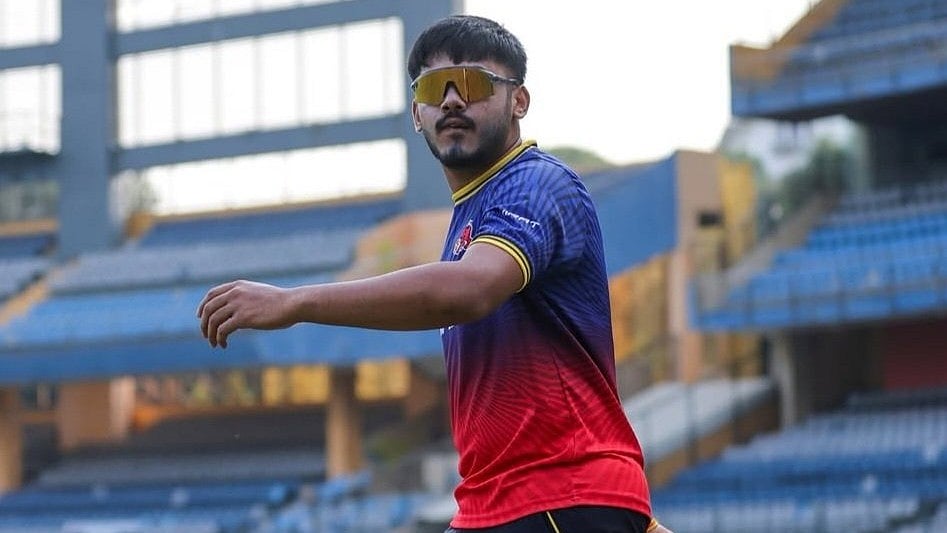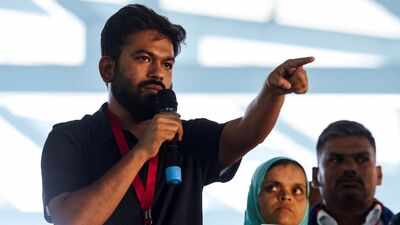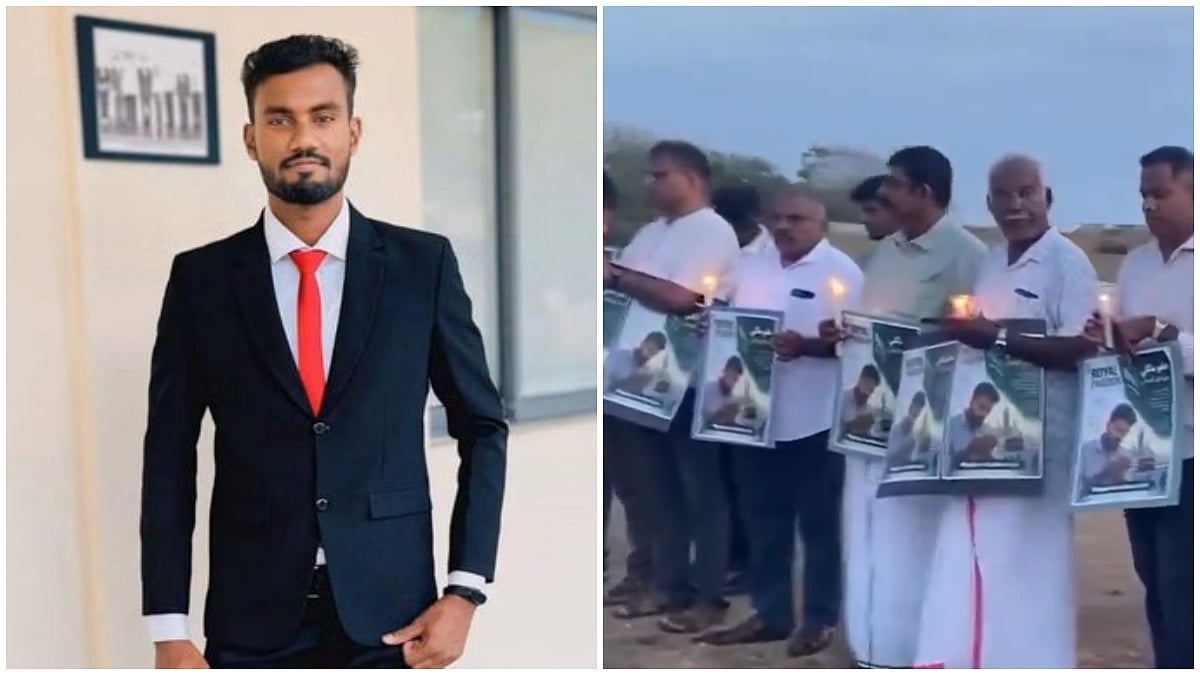







Journalist Bhavdeep Kang examines how youth grievances and protests against the Election Commission may be used by political parties to build an anti-incumbent coalition | Representational Image
At first glance, the civil unrest in Lutyens’ Delhi is a classic instance of the Youth Bulge effect. Countries with a high youth demographic are vulnerable to political violence, as empirical studies attest. But the recent protests are related to another phenomenon: the use of ‘apolitical’ movements by political actors to disrupt the status quo, destabilise the government, and create an anti-incumbent coalition.
India’s 15-29-year demographic accounts for 27 per cent of the population. Political scientists have argued that a youth bulge above 20 per cent multiplies the potential for civil unrest. First, youth populations are inherently volatile and predisposed to challenge established forms of authority. Second, they have fewer career and financial responsibilities towards their families and are, therefore, easier to mobilise. Third, higher-educated youth aspire to elite economic and social positions and are frustrated when they do not qualify.
“Youth have played a prominent role in political violence throughout recorded history, and the existence of a ‘youth bulge’ […] has historically been associated with times of political crisis,” American sociologist Jack A. Goldstone observed in a 2002 paper. When young people are attuned to entrepreneurship, innovation, sports, and excellence in the field of their choice, and a supportive ecosystem exists, the youth bulge becomes an asset. The reverse occurs when there is no supportive framework and degrees do not yield employment opportunities. This becomes a recipe for political unrest.
Existing Grievances And Manufactured Crises
Youth movements are not based on invented grievances; rather, the primary actors exploit existing faultlines by magnifying and weaponising them against the state. The NEET paper leak was an obvious systemic vulnerability around which youth were mobilised. A protest against a corrupt and malpractice-ridden examination system, where government agencies act as gatekeepers, was long overdue. That it resonated with youngsters and their parents was only to be expected.
The protest against the Election Commission of India (ECI), on the other hand, has all the hallmarks of a ‘manufactured crisis’. The term refers to the intentional generation of public panic over a policy issue by a set of political entrepreneurs, whose objective is to raise their own profile at the expense of existing players. Such a crisis is endogenous, as it emerges from within the political system and not outside it. Prima facie, the anti-ECI protest is not based on any clear-cut principle. That the Chief Election Commissioner behaved in a high-handed manner vis-a-vis his colleagues is hardly a cause to sack him. The charge of manipulation of electoral rolls is as yet unproven, given that secret ballots ensure that the voting record of an individual cannot be accessed. Thus, we have numerous instances of prominent BJP leaders and their families receiving ECI notices during the SIR, owing to a change of address and/or constituency, a discrepancy in the way names were spelt, or absence in the 2002 electoral rolls.
The Strategy Of Tactical Radicalisation
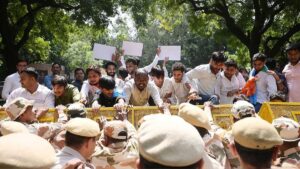
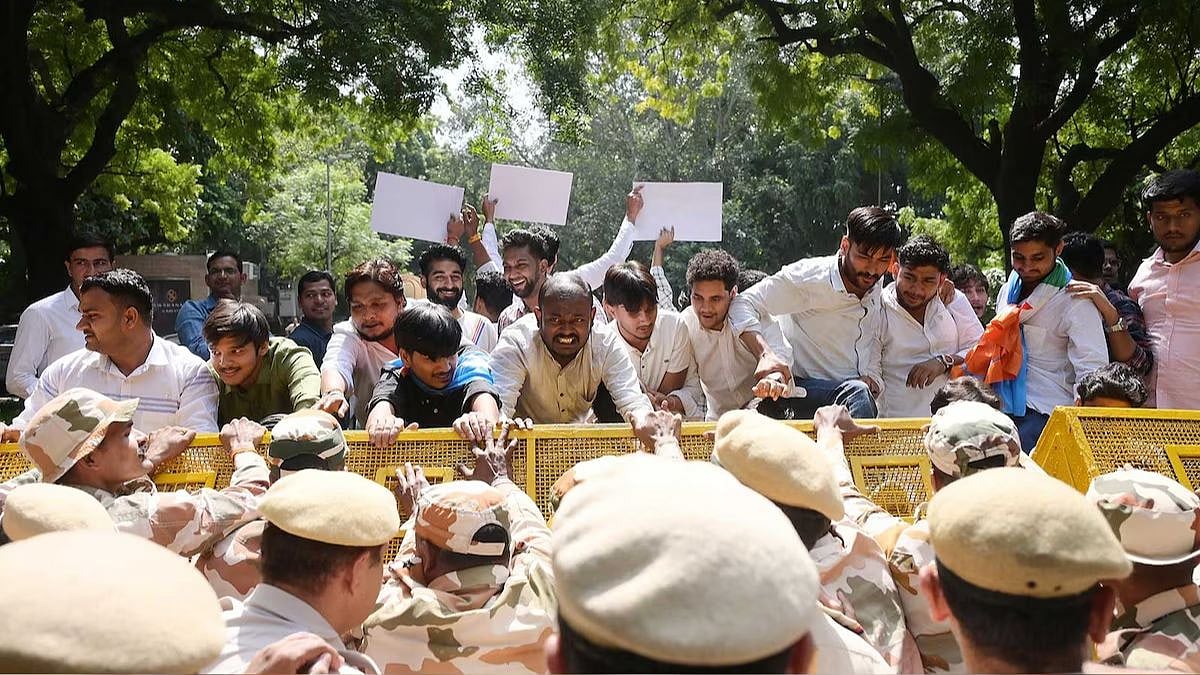
In both instances, the Cockroach Janata Party’s strategy has been one of ‘tactical radicalisation’. Initially positioned as a peaceful protest, it rapidly shifted to violating statutory orders, storming barricades, confronting security forces, and attempting to provoke state violence. The rationale is that moderate actions do not attract public attention; only disruption does. Secondly, perceived victimisation by the state garners mainstream sympathy and adds momentum to the movement. For example, claims of women protestors being molested by the police forced the state to present instances of women police personnel being molested by protestors.
The protest has been framed as ‘apolitical’. While the leaders of the movement were closely affiliated to the Aam Aadmi Party, they now claim to head a non-partisan youth movement that rejects conventional politics. The fact is that the demonstration has been leveraged by the Congress to build an anti-BJP coalition. The party has gained the most from the CJP by positioning itself as the leader of that coalition. This is a prime example of a partisan actor using the hostility generated by a supposedly apolitical movement to batter a political opponent and make a bid for power. As sociologist Tomás Gold argues, “Partisan actors can use protestors’ anti-partisan frames to improve their own competitive positions.”
How The State Responds To Protests
Finally, the question of how the state responds to such a crisis remains. Considerable literature on protest dynamics exists. Outcomes depend on the level of violence and emotions whipped up by either side. One theory hypothesises a ‘U’-shaped relationship between the approach of the state and the size of the public protest. If the state adopts kid-glove tactics, the protestors become confident and the protest grows in size. People are more inclined to join a large protest, so the numbers grow even larger.
Tough repression of the protest by the state will discourage protestors and shrink the numbers. When the opportunity costs of joining a protest are high, people tend to stay away. If protestors themselves turn violent, people are repelled and the protest shrinks. Besides, the public is in favour of repressing violent protests, which enables the state to use force and further reduces the numbers.
However, emotion plays a key role in determining outcomes. If repression triggers anger against the state, pride in standing up to it, and a sense of belonging to a group, the protest will gather momentum. Protestors strategically seek to position themselves as victims, and social media is instrumentalised in service of this strategy.
A Shared Political Objective
Either way, there’s little doubt that politics is at play. It doesn’t matter if the players do not share a stage. The goal is the same, and it is not limited to the resignation of the CEC. As Opposition leader Rahul Gandhi said, “All the protests are one protest.”
Bhavdeep Kang is a senior journalist with 35 years of experience in working with major newspapers and magazines. She is now an independent writer and author.