










Tesla’s Cybertruck arrived with big ambitions, a futuristic design and Elon Musk‘s backing.Now, it is bidding adieu.The high-tech pickup was meant to shake up the automobile industry, but its journey is coming to an end. Musk announced on Friday that Tesla would wind down Cybertruck production around the middle of 2027 at its facility outside Austin, Texas.The move will make room for increased production of the company’s Cybercab robotaxi, as Tesla shifts its focus towards autonomous vehicles.But what led to the Cybertruck’s early exit? A combination of disappointing sales, a price tag that was much higher than initially promised and growing controversy surrounding Musk.
1. Sales and pricing failed to meet expectations
Musk had projected annual production of 250,000 Cybertrucks, but sales remained far below that target. Kelley Blue Book estimated that Tesla sold just 20,237 units last year, around half the previous year’s sales. Sales through September this year fell another 28%. Spencer Penn, a former Tesla executive who left before the Cybertruck’s launch and now heads software developer LightSource, said electric trucks had struggled to attract demand.“A really controversial vehicle unveiled by a controversial individual into a market where none of the electric trucks have been able to really capture demand,” he said.Pricing was another hurdle. Musk had promised a price tag below $40,000, but the first Cybertrucks sold for double that amount or more. Penn, who had booked a pre-sale reservation, eventually decided against buying one after the promised price failed to materialise.
2. Its design made it impossible to ignore
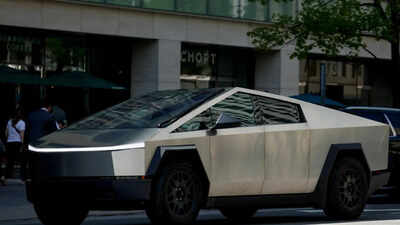
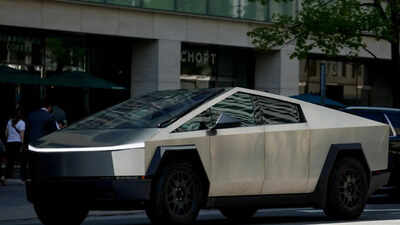
With its sharp angles and stainless-steel body, the Cybertruck looked more like a science-fiction vehicle than a conventional pickup. Its 2019 unveiling grabbed attention when a Tesla designer threw a metal ball at its supposedly unbreakable glass, only for the window to shatter. A second attempt on another window ended the same way. Musk, however, remained convinced about his vision.“I just wanted to make a futuristic battle tank — something that looks like it could come out of ‘Blade Runner’ or ‘Aliens’ or something like that but was also highly functional,” he told Automotive News.He called it “a better sports car than a Porsche 911” and “a better truck than an F-150.” The design drew both admiration and ridicule. Armen Hareyan, whose Torque News site covers autos, said: “Few vehicles in history have generated as much attention. The Cybertruck became a cultural symbol – loved, mocked and impossible to ignore.”Penn initially found its appearance revolting and called it “madness”, but his opinion changed the more he looked at it. He eventually saw it as an example of Tesla’s adventurous spirit and willingness to take risks. “Some of these bets work and some of these bets don’t,” he said.
3. Musk’s political image became a problem for some customers
Musk’s association with several right-wing figures, particularly US President Donald Trump, alienated some Tesla customers. As his image shifted from an eccentric innovator to a polarising figure trading his billions for political influence, some previously passionate owners rushed to sell their cars. Others put stickers on their bumpers reading, “I bought this before Elon went crazy.”The backlash extended to demonstrations outside Tesla showrooms, with organisers also urging investors to sell their shares. Some protests turned violent, with Molotov cocktails thrown at Tesla vehicles, charging stations set ablaze and dealerships covered in graffiti. Cybertruck owners faced hostility too, with some being shouted at with “Nazi!” and receiving extended middle fingers.Ross Blankenship, a Cybertruck owner, said that he disliked seeing a vehicle he loved turned into a political symbol. Its futuristic appearance had reminded him of “Halo”, the science-fiction video game he played as a child.“I had that sort of child in me wanting to be part of something cool that would change the future of automotive,” Blankenship said in a call from his Cybertruck as he drove through Sunnyside, Colorado.Although he said he agreed with Musk on politics, he was unhappy about the vehicle becoming associated with the controversy.“I never bought it for any other reason than the fascination with the future technology of trucks … so that was a little heartbreaking.” The Cybertruck’s discontinuation also comes as Tesla shifts its attention towards autonomous vehicles. Musk said winding down production would allow the company to make more Cybercab robotaxis, a segment on which he is betting Tesla’s future.For a vehicle that Musk once called Tesla’s best product, the planned shutdown marks an unceremonious end to a much-hyped project. Yet, it has not lost all its fans. Blankenship said he would buy another Cybertruck again in a heartbeat. He called the end of its production “a sad moment.”