



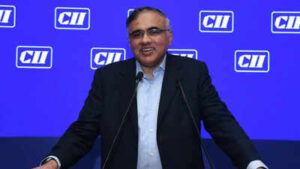



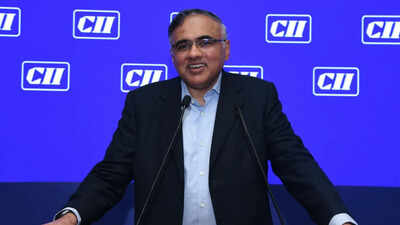
India’s free trade agreement (FTA) with the UK, which came into force in July, and the proposed pact with the European Union, expected to be signed next month, offer significant opportunities for domestic manufacturers to expand their global footprint.But industry needs to step up efforts to translate tariff concessions into higher exports. Narayan Sethuramon, co-chairman of the CII International Council, says Indian manufacturers should target 20% annual growth, with exports driving expansion.3He explains how companies can tap opportunities in Europe, deal with sustainability requirements and diversify markets amid global uncertainty. Edited excerpts:Q: How prepared is the Indian industry to take advantage of the new FTAs?A: Small and medium enterprises (SMEs) account for a significant share of India’s exports, and many have been operating in these markets for years. Industry bodies are now playing a major role in taking the benefits of FTAs to companies across regions and sectors. CII is conducting awareness sessions through its regional and state offices.Take textiles, for instance. Under the India-UK FTA, duties on textiles have fallen from 12% to zero. But companies need to understand which products offer the best opportunities – whether home apparel or technical textiles. We have undertaken research and are holding awareness sessions to help members identify these opportunities.CII’s task force on export competitiveness and supply chain resilience has also launched Market Facilitation Services to handhold members through a seven-step process. It starts with identifying opportunities and analysing which FTA and market would work best for a particular company. We then go down to the six-digit HS code level to identify the specific products that offer potential.Government has also done considerable research, identifying products where India already has a dominant market share, those where its share is below 15%, and products that may face additional certification requirements or non-tariff barriers. Government and industry are working together to help SME exporters. It is early days, but there is a structured effort underway.Q: Will the costs associated with carbon emissions, the EU Deforestation Regulation (EUDR) and Carbon Border Adjustment Mechanism (CBAM) outweigh the benefits of the FTA?A: Obviously, these costs will eat into margins. We have to be practical about it. But this is where the overall competitiveness of Indian industry comes into play. Even after accounting for regulatory costs, an Indian company could remain more competitive than a rival from another country.We hope the govt will engage with its European counterparts to seek some additional time, at least for small and medium-sized companies in India. Even without that, Indian industry has its own competitive edge. Margins may be slightly lower than expected, but exporters could still secure additional sales at profitable prices.Q: Which products and sectors offer the greatest export potential, particularly for SMEs?A: FTAs are one cog in the wheel of India’s ambition to raise manufacturing’s share of GDP to 25%. Today, it is about 14%. A manufacturing company that merely retains its existing market share in India would grow at the 7-8% rate of the economy. That is not good enough. I believe Indian manufacturing enterprises should target 20% year-on-year growth, with additional growth coming from export markets.Traditional products such as textiles and leather goods have enormous potential. Marine products, engineered goods and foundries, which employ a large number of people, also offer opportunities globally. There is potential in advanced manufactured products such as precision-engineered goods as well.Defence is a good example. Until a few years ago, India barely exported defence products and was a major importer. Today, defence production has expanded significantly. The private sector accounted for 23% of defence production last year, whereas its share was in the single digits or negligible not too long ago. Air conditioners are another segment where exports have grown considerably.We need to focus on both traditional and advanced manufactured goods, keeping in mind the requirements of job creation and economic growth.Q: European markets are facing geopolitical uncertainty and economic headwinds. How can Indian exporters ensure the FTA gains traction when it becomes operational?A: There are three categories of buyers. The first category comprises those who have traditionally been hesitant to source from India, perhaps because of concerns about distance or past quality issues. Indian industry has significantly upgraded the quality of its manufactured products. The FTA also sends a strong signal to European buyers that their govt has entered into an agreement with India and they should consider doing business with us.The second category comprises companies pursuing a China-plus-one strategy. This is no longer limited to the US. European companies are also wary of overdependence on China and are looking at alternative sourcing destinations. We can see more interest in developing additional sourcing options in India.The third category is where Indian companies compete directly by offering better-priced or more competitive products. Here, too, the FTA makes a difference by signalling that India is a trusted partner.However, much more needs to be done through structured buyer-seller meetings. That is where industry and industry associations must step in. We cannot expect govt to do everything. Government has done much of the heavy lifting, and industry must now play its part.Q: Apart from CBAM and green regulations, what non-tariff barriers are Indian exporters facing in Europe?A: The issues often relate to certification and testing. Certificates issued by Indian laboratories are not recognised in many European countries. Mutual recognition agreements need to be worked out so that testing conducted in India is accepted. Otherwise, the costs of testing and certification can become prohibitive.Similarly, many European buyers ask for certifications such as EcoVadis. We need more organisations in India that can provide these certifications to Indian suppliers.Q: Which European markets should Indian companies prioritise?A: Our first focus should be Germany, Italy, Spain and the Netherlands. Together, these countries represent a huge market for India. India’s share of their total imports across many products is in single digits or low double digits, leaving considerable room to grow.For quick wins, we should also focus heavily on the UK FTA. CII’s analysis of UK imports shows that India’s share is not more than 10% in any of the products analysed. There is tremendous scope for growth.We should be ambitious. Why should the 20% growth target be confined to the services sector? Manufacturing companies should also aim for that rate. For the next five or six years, I would suggest focusing on these markets through a phased approach before expanding to others.Q: The UK FTA has been in place for over three months. Has there been a pickup in trade?A: There has been growth in trade. The target of $100 billion in bilateral trade by 2030 is not unimaginable. It is very much achievable.Q: Is there a risk of a sudden surge in imports or circumvention under the UK FTA?A: The two economies are quite complementary, and I don’t see a threat of import surges given their relative cost positions. We must recognise that this is different from the first round of FTAs we signed, which were essentially with countries that competed with us.Q: Will the ongoing conflict and disturbances in the Gulf region affect the rollout of the India-EU FTA?A: They may not affect the rollout, but could influence the pace of growth. India, the US and countries across the world are grappling with higher inflation and uncertainty. India, touchwood, is in a better position than many others, with growth of 7-7.5%.Industry hopes some of these issues will settle down early next year and the world will become more stable. When regions are at war, the willingness to invest is obviously affected. Industry does not like uncertainty.Q: How important is export diversification under the UK and EU FTAs, particularly amid uncertainty over the US market?A: We have to look at this in perspective. There have been several positive statements over the last few days on the US trade agreement. We have never looked at the Europe and UK FTAs as replacements for existing sales. They are about diversification and growth.The US has been India’s largest merchandise export market for many years and will probably remain so for the next few years. Despite the tariffs, many sectors say their sales have not been affected. Either the US buyer has absorbed the tariff or shared it with the Indian supplier.Export numbers have not declined; in fact, they have increased. Volumes have also remained largely unaffected across many manufacturing sectors.This shows that US customers have been able to pass on price increases to their own buyers, which is ultimately beginning to reflect in US inflation. I don’t believe US inflation is driven only by diesel prices or other such factors.From a risk-mitigation perspective, diversifying markets is a sound strategy. However, I personally don’t think sales to the US will decline for most Indian exporters.