









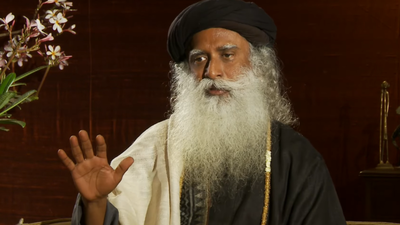
What should a family do with the clothes of someone who has died? Should they be kept as memories, passed on to relatives or given away? In an old video on his official YouTube channel, spiritual leader Sadhguru explained why certain Indian traditions advise against keeping a deceased person’s belongings and why some clothes are traditionally burnt while others are distributed among several people.In the video, Sadhguru was responding to a question from a person whose father had died and who still had several of his clothes. The questioner wanted to know why some traditions discourage keeping the belongings of the deceased and what should be done with them.Sadhguru began by explaining that, according to yogic understanding, death is not an instantaneous process. He compared it with birth, which has a fixed date but takes nine to nine-and-a-half months to complete.“You were not born in one day,” he told the questioner. “Similarly, you do not die in one day. You die slowly.”
Sadhguru’s explanation of what happens after death
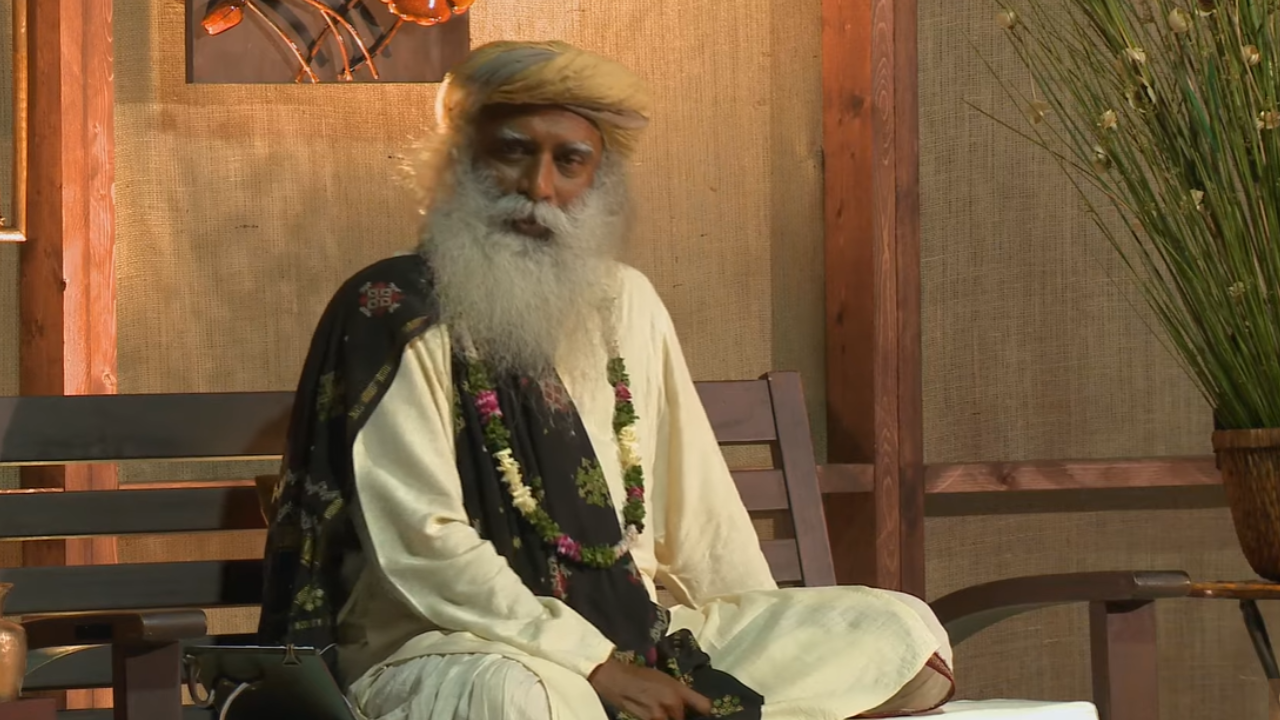
Image courtesy: ISHA Foundation
Sadhguru explained this process through the five basic manifestations of prana, or life energy, in yogic philosophy. He said these manifestations withdraw from the body in stages, even after a doctor has declared a person dead.According to his explanation, Samana, which he associates with maintaining the body’s temperature, begins to withdraw within approximately 21 to 24 minutes. He said the body starts cooling as this happens. He also referred to the traditional practice of checking the nose for coldness as a way of determining whether someone had died.He said Prana withdraws between 48 and 64 minutes, followed by Udana between six and 12 hours. Sadhguru claimed that as long as Udana remains, certain tantric processes can potentially revive the body, although he described revival after its withdrawal as practically impossible.He then explained that Apana withdraws between eight and 18 hours, while Vyana, which he described as the preservative aspect of prana, can take much longer to leave. According to him, this final process may continue for 11 to 14 days after a natural death.These timings and the concept of prana withdrawing in stages are part of Sadhguru’s yogic and spiritual explanation. They are not established medical descriptions of what happens after death.
Why he says clothes should not be kept together

Photo: Canva
Sadhguru connected this understanding of death to the traditional handling of a deceased person’s belongings. He said that objects closely associated with someone’s body may retain traces of their physical presence. “Today, we know that DNA can be extracted from your old clothes,” he said, adding that something of a person’s physical identity remains in the things they have worn and touched.He used this idea to explain why yogis traditionally try to leave behind very few possessions. According to him, some yogis even burn the huts in which they have lived after their death because they do not want their physical traces to remain.He also described the simple living arrangements of a sannyasi, who may own only a few pairs of clothes, a drinking vessel, a plate and a sheet to sleep on. The intention, he said, is to avoid accumulating possessions and forming too many physical attachments.Sadhguru also referred to the scent left behind on clothing. He said a trained police dog could identify a particular person’s jacket from among a thousand jackets because traces of that person’s scent remain on it.He used this example to explain his belief that clothes can continue to carry a connection with the person who wore them. According to him, these belongings may become a place where different kinds of energies remain.
What should families do with a deceased person’s clothes ?
Sadhguru said the decision depends on the belongings and the circumstances. He acknowledged that burning every item would be wasteful, particularly today, when people own large quantities of clothing and footwear.However, he specifically advised burning items that have been in very close contact with the body, particularly underclothes. “Certain things that have been in very close and intimate contact with the body, particularly underclothes, should be burnt,” he said.For other garments, he described a traditional practice in which the clothes of the deceased were washed within the first 10 or 11 days. If they were valuable, they could then be distributed among different people.He explained that the clothes should not all go to one person or family. A jacket could be given to one person, trousers to another and the remaining belongings to others. The purpose, according to him, was to prevent the deceased person’s possessions from remaining concentrated in one place.Sadhguru also compared this practice with clothing habits in colder Western countries, where people may wear a jacket repeatedly without washing it after every use. He said that in India, clothes were traditionally washed more frequently after being worn, although these habits are changing.He offered two ways of handling the belongings: wash the clothes and distribute them among several people, or burn particularly intimate clothing.
Why he says keeping fewer possessions matters
Towards the end of the explanation, Sadhguru returned to the idea of physical attachment. He said people often accumulate far more belongings than they need, but those possessions do not accompany them when they die. “When you want to leave, the people attached to you will not necessarily come with you. They may say they love you, but they cannot accompany you,” he said.The practices he described reflect his interpretation of traditional yogic beliefs. They should not be understood as medical requirements or as evidence that wearing a deceased family member’s clothes is physically harmful.